
How Real Professors Guarantee Original Work
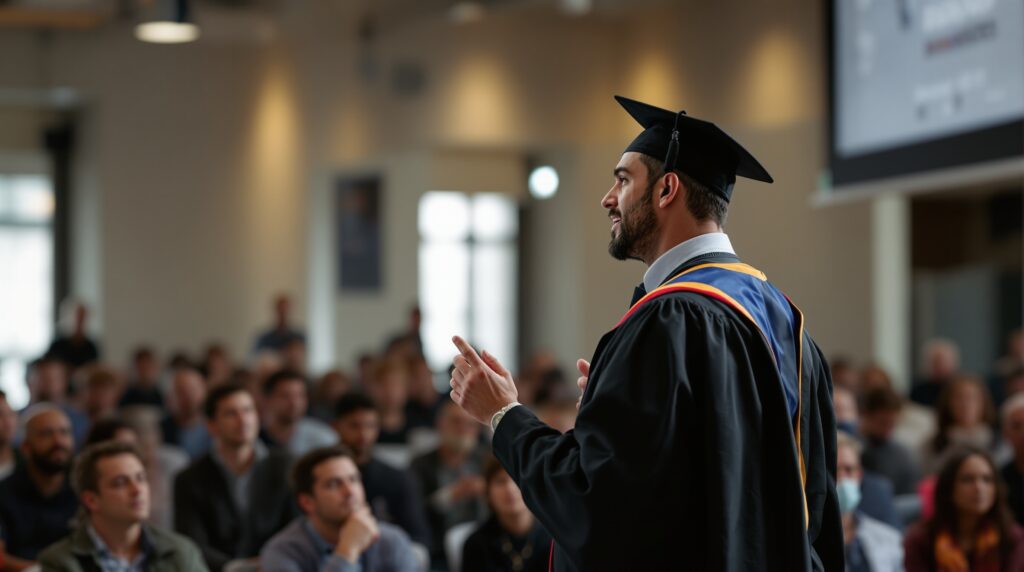
Written From Scratch, For You
Every single chapter of your dissertation gets custom-crafted by a PhD expert in your specific field. Not someone who dabbles in education one day and business the next. Someone who lives and breathes your area of study.
There are no templates here. No recycled dissertations from previous students. No “let me just tweak this Chapter 2 I wrote for someone else last year.”
Each dissertation starts with a blank page and your specific research question. Because here’s the thing your online professors won’t tell you: templates are what get students caught in plagiarism scandals. Even if you change the words, committees recognize the structure and flow of recycled work.
When a real professor writes your dissertation chapters, they’re building something that only exists for your study. Your variables. Your population. Your theoretical framework. Not some generic framework that “usually works” for studies in your field.
Matching You With the Right Expert
This is where most dissertation help services fail spectacularly. They assign you whoever’s available. Maybe that person has a PhD. Maybe they wrote their dissertation eight years ago and haven’t touched academic research since.
Real professors are different because we have to publish or perish. We’re writing journal articles constantly. We’re collecting data, doing analysis, making original contributions to the literature—or we lose our jobs. That’s not hyperbole. That’s academia.
What this means for you: our design and methods teeth are sharp. We’re up on all the current literature in your field. We know what’s been studied and what hasn’t. We can spot an unoriginal topic before you waste six months on it.
But here’s the bigger advantage: we don’t just do the work for you. We mentor you through every step so you understand why your study is original. We explain why you’re using phenomenology instead of qualitative descriptive. Why you’re doing regression analysis instead of correlation analysis if you’re on a quantitative study.
Through these mentoring exchanges, you’ll know more about why you’re doing what you’re doing than your own dissertation chair does. Than your committee members do. And when you can articulate that originality clearly, your committee can’t dismiss it.
Advanced Plagiarism Detection
Before your dissertation ever reaches your committee, it goes through industry-leading plagiarism detection software. We’re talking Turnitin and similar tools that universities use themselves.
This software catches everything. Exact matches with published works. Paraphrasing that’s too close to source material. Overlap with dissertations from other universities. Even matches with prior client projects—though with real professors, there won’t be any because we don’t recycle content.
But here’s what’s really being checked: zero overlap with anything out there. Your literature review won’t flag as too similar to someone else’s synthesis. Your methodology won’t read like it was lifted from another study. Your data interpretation will be yours alone.
Most paper mills skip this step. They figure if it sounds different enough, you’ll be fine. Then you submit to your university’s plagiarism checker and get flagged for a 40% similarity score. Good luck explaining that to your IRB.
Manual Reviews by Professors
Plagiarism software is great for catching exact matches and close paraphrasing. You know what it’s terrible at? Catching conceptual plagiarism.
That’s where PhD experts come in with manual reviews. We look at originality in ways software can’t:
Literature synthesis: Is your review actually synthesizing sources in a new way, or are you just summarizing what everyone else already said? Are you identifying the knowledge gap properly? Software can’t tell you that. A professor who’s published 50 peer-reviewed journal articles can spot it instantly.
Theoretical application: Are you applying theories in a way that’s been done before? Is your theoretical framework actually supporting your research questions, or did you just throw in some theories because your committee wanted to see them? We’ve been dissertation chairs and committee members hundreds of times. We know when theoretical application is original and when it’s just window dressing.
Data interpretation: This is where a lot of students get tripped up. They collect original data but then interpret it using the same lens as previous studies. The interpretation isn’t new, so the contribution isn’t original. Real professors make sure your analysis and interpretation add something genuinely new to the literature.
No AI-Generated Content
Let’s be blunt: AI cannot write a dissertation. It can’t do original research. It can’t apply theory in novel ways. It can’t interpret your specific data in a way that contributes new knowledge to your field.
Can AI help organize sources? Sure, maybe. But even that’s questionable because AI doesn’t understand the nuances of academic literature in your specific subfield.
Every dissertation from real professors is human-written by someone with a PhD. Someone who’s done their own original research multiple times. Someone who understands that scholarly reasoning can’t be automated.
Your committee will know if AI touched your dissertation. They’ll see the generic phrasing, the surface-level analysis, the lack of deep engagement with the literature. And they’ll reject it.
We don’t take that risk with your degree. Human experts only.
Common Traps That Lead to Unoriginal Work (and How We Avoid Them)
Trap 1: Overly Broad or Recycled Topics
Here’s a truth bomb: race and school discipline is not an original dissertation topic. Neither is transformational leadership among clergy. Neither is organizational strategies of nonprofits during economic downturns.
Students land on these topics because they seem interesting and problem-driven. And they are both of those things. But on Google Scholar, you’ll find hundreds of studies on each of these general topics.
The solution isn’t abandoning your interest area. It’s making your topic precise enough to be original.
Real professors guide you through this process by asking the right questions:
- What other factors might enhance or mitigate the focal phenomenon?
- What samples haven’t been investigated yet?
- What research designs and methods might improve understanding?
For example, instead of “race and school discipline,” you might study the effect of being Black and Latino on teacher referrals specifically in elementary and middle schools. Or the moderating effects of risk and protective factors at home for the relationship between race and suspension in K-12 settings.
Notice how much more specific those are? That’s the difference between an unoriginal topic that wastes your time and an original one that gets approved.
Trap 2: Copy-Pasting Literature Reviews
Your literature review isn’t a book report. It’s not a summary of everything ever written on your topic. Yet that’s how most students—and most dissertation coaches—approach it.
Here’s the secret your professors never tell you: your literature review should be structured around your research question.
If your question is “To what extent does X affect Y,” then your lit review should have three high-level sections:
- Studies that look at X but not Y
- Studies that look at Y but not X
- Studies that look at both X and Y
That third section is where you distinguish your study. You show what the knowledge gap is by demonstrating that the exact study you’re going to do doesn’t exist yet.
Real professors help you structure your synthesis this way. We map literature to your theories and research questions. We make sure you’re not just summarizing but actually showing how previous research informs your original study.
This structured approach prevents copy-pasting because every source serves a specific purpose in building toward your contribution.
Trap 3: Generic Writing from “Coaches” or Paper Mills
Dissertation coaches have written one dissertation. Maybe. Years ago. They’re not publishing research. They’re not up on the current literature. Their methodological skills have gone dull.
Paper mills are even worse. They’re churning out generic content with templates and formulas. They’ll sell the same theoretical framework to multiple students with minor tweaks.
Real professors are different because we’re active scholars. We’re publishing peer-reviewed research constantly. We know what journal reviewers look for—the same things your committee looks for. Original contributions. Novel applications of theory. Methodological rigor. Interpretations that advance the field.
When you work with someone who has to publish or perish, you’re working with someone whose entire career depends on producing original scholarship. That expertise translates directly to your dissertation.
The Real Professors Difference
What separates real professors from everyone else in the dissertation help industry comes down to three things.
Direct Mentorship
We don’t just tell you what to do and when to do it. We explain why you’re doing something a certain way. Why you’re using Theory A and not Theory B. Why phenomenology makes sense for your study instead of grounded theory.
A lot of people are surprised when they work with us. They think they’re taking a shortcut. But they’re not. They’re actually learning more because we’re mentoring them through every step of the process.
This deep understanding is what lets you defend your dissertation confidently. You’re not just reciting what someone told you to say. You understand the reasoning behind every methodological choice, every theoretical application, every interpretation of your findings.
Protection Against Academic Bullying
Academic bullying is real, and it often shows up as attacks on your originality. Your committee moves the goalpost. They claim things aren’t aligned when they are. They send you into infinite revision loops.
We know when you’re being bullied because we’ve been in those committee rooms hundreds of times. We know the games professors play. And we know how to help you navigate those communications to make the bullying stop.
We’ll help you write emails that address your professor’s concerns while standing firm on your original contributions. We’ll prepare you for face-to-face meetings where you can articulate your study’s originality so clearly that your committee can’t dismiss it.
When your originality is questioned unfairly, we help you file formal complaints with the dean of your program. Because sometimes the problem isn’t your work—it’s a lazy or vindictive committee member.
100% Original, Plagiarism-Free, Committee-Ready Dissertations
This is our guarantee: every dissertation we help you create is completely original, passes all plagiarism checks, and is ready for committee review.
No recycled content. No AI generation. No shortcuts. Just PhD-level expertise applied to your specific research question, in your specific field, with your specific data.
Your dissertation writing service experience should result in work that you’re proud to defend. Work that contributes genuinely new knowledge to your field. Work that gets you graduated without years of unnecessary revisions.
Your Original Dissertation Starts Here
Originality is the cornerstone of doctoral success. Without it, you don’t have a dissertation—you have an expensive document that will never satisfy your committee.
But originality isn’t something you stumble into. It requires expertise in your field, deep knowledge of the existing literature, sharp methodological skills, and the ability to articulate what makes your contribution new.
That’s what real professors bring to every dissertation. We’ve published the research. We’ve sat on the committees. We’ve seen every question your professors will ask, and we know the right and wrong answers to those questions.
Most of all, we make sure you understand your dissertation’s originality well enough to defend it confidently. Because when you can explain clearly what makes your study different from the 47 other studies on similar topics, your committee has no choice but to approve it.
No recycled content. No AI-generated fluff. No generic templates from paper mills. Only authentic, original scholarship from PhD experts who are still active in your field.
Ready to stop worrying about whether your dissertation is original enough? Ready to work with someone who can guarantee your work will pass every plagiarism check and satisfy every committee requirement?
Book a free consultation with a real professor today. We’ll discuss your topic, review your current progress, and show you exactly how we’ll ensure your dissertation is completely original and defensible.
Because you didn’t come this far to get stuck in revision hell. You came to graduate.