
How Turnitin Detects AI Generated Academic Work
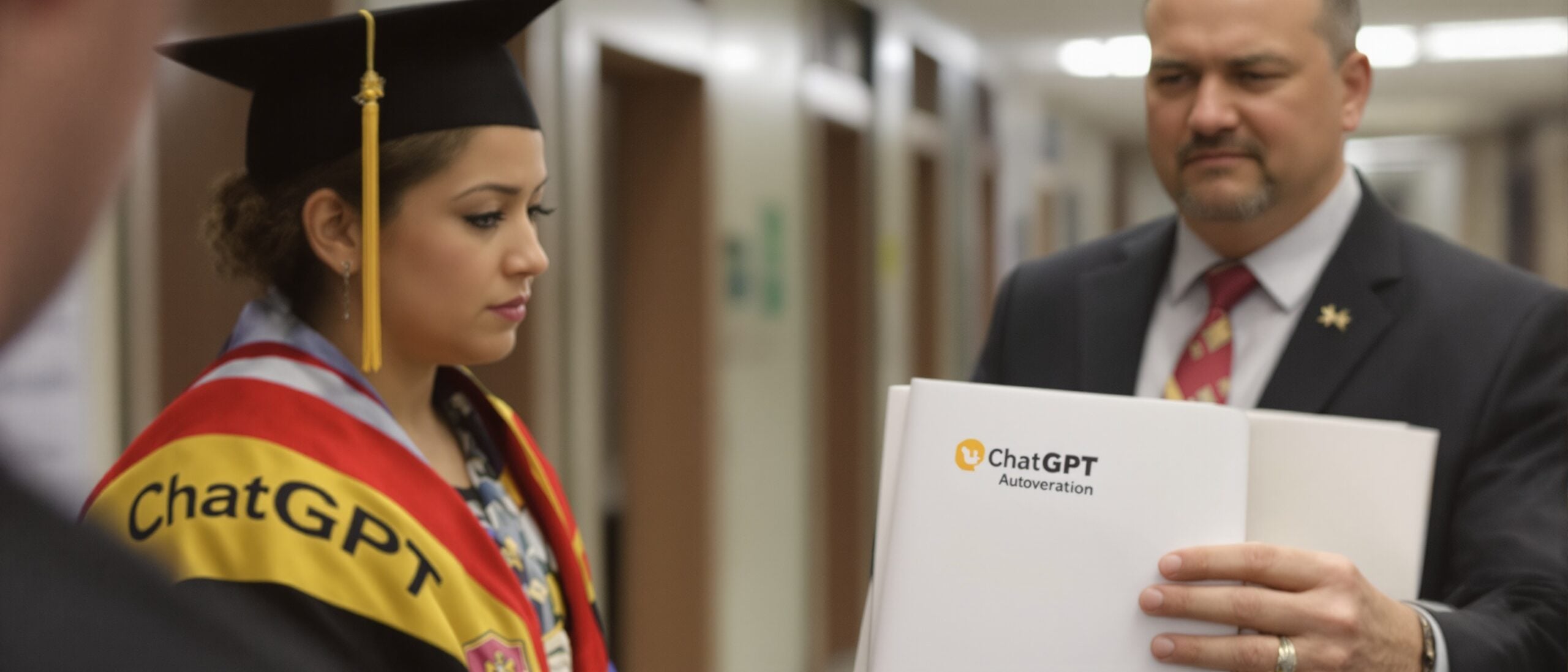
Let me tell you about a student I talked to last month. She’d submitted her dissertation chapter to her university’s
plagiarism checker, which uses Turnitin. Came back flagged as 78% AI-generated. She was panicking. She hadn’t used AI to
write it—she’d spent weeks working on that chapter herself. Turns out, the problem was that she’d used AI to “polish”
her writing. She’d written the chapter, then fed it through ChatGPT asking it to “improve the clarity and flow.” ChatGPT
rewrote significant portions in its distinctive style. The content was hers, the research was hers, but the language
patterns triggered Turnitin’s AI detection. Her committee was questioning whether the work was actually hers. She was
facing potential academic integrity violations. All because she didn’t understand what Turnitin’s AI detection actually
catches and why. So let’s break down exactly how Turnitin detects AI-written work in 2025, what signals it’s looking
for, and what this means for doctoral students and academics who need to produce original scholarly content.
Turnitin’s AI detection isn’t magic. It’s using specific technical methods to identify text that was likely generated by large language models like ChatGPT, Claude, or other AI writing tools. Understanding what it’s actually detecting helps you understand why certain writing gets flagged and why trying to fool it usually doesn’t work.
The first thing Turnitin analyzes is linguistic patterns—the way sentences are structured, the word choices, the flow between ideas. AI models have distinctive patterns in how they write. They tend to use certain transitional phrases repeatedly. They structure sentences in predictable ways. They have consistent patterns in how they introduce topics and conclude paragraphs. Human writing is messier. We have idiosyncrasies. We use our favorite words and phrases. We structure things inconsistently. Our writing style varies depending on our mood, energy level, and how much coffee we’ve had. Turnitin’s algorithms have been trained on millions of examples of AI-generated text. They’ve learned to recognize the patterns that distinguish AI writing from human writing. When your text shows the consistent patterns characteristic of AI-generated content—even if the specific words weren’t in Turnitin’s training data—the system recognizes the style signature.
AI models tend to repeat certain phrases and constructions more than humans do. They have favorite ways of expressing things that show up across different outputs. For example, GPT models love phrases like:
This is where Turnitin AI detection accuracy gets really sophisticated. The system uses probability modeling to assess how predictable your writing is.
To understand this, you need to know a bit about how AI language models generate text. When ChatGPT or similar tools write, they’re essentially predicting the most probable next word based on the words that came before. They assign probabilities to possible next words, then choose from the highest probability options. This means AI-generated text tends to follow highly probable, predictable paths through language. Human writers don’t work that way. We make less predictable choices. We use unusual word combinations. We structure things in ways that might not be the statistically most likely option but that work for what we’re trying to communicate.
Turnitin runs your text through its own language models to calculate how probable each word choice and sentence structure is. If your entire document follows highly predictable, statistically likely paths—the kind AI models prefer—that’s a strong signal the text was AI-generated. Research on Turnitin GPT detection shows this is one of the most reliable signals. Text that’s too “perfect” in terms of following expected language patterns raises flags, even if there’s no smoking gun like repeated phrases. This is also why having AI “improve” your writing often backfires. The AI makes your natural, less predictable human writing more predictable and statistically typical—which makes it look more like AI wrote it.
Now we’re getting into the technical weeds, but this is important for understanding why AI detection works and why it’s hard to fool.
Perplexity measures how surprised a language model is by the text it’s analyzing. Low perplexity means the text was predictable and unsurprising to the model. High perplexity means the text contained unexpected elements. AI-generated text tends to have low perplexity because AI models generate text that other AI models find predictable. Human writing tends to have higher perplexity because humans make less predictable choices. Turnitin measures the perplexity of your text. Consistently low perplexity across your document is a signal that an AI model probably generated it.
This refers to how words and phrases are distributed throughout your text. Human writing tends to have “bursty” patterns—we use certain words or concepts intensely in one section, then don’t use them for a while, then return to them. AI-generated text tends to have more uniform distribution. Concepts and vocabulary are spread more evenly throughout the document because the AI is optimizing for coherence and doesn’t have the natural clustering patterns humans create. Turnitin analyzes the distribution patterns of tokens (words and phrases) in your document. Uniform distribution that lacks the natural burstiness of human writing suggests AI generation.
Related to burstiness is overall uniformity in language complexity, sentence length, and stylistic choices. Human writers vary. One paragraph might have complex, long sentences. The next might be shorter and simpler. Vocabulary complexity fluctuates. Formality level shifts slightly. AI-generated text tends to be more uniform. Sentence lengths cluster around similar values. Vocabulary complexity stays consistent. The level of formality doesn’t vary much. Turnitin looks for this uniformity as an AI signature. Text that’s too consistent in its characteristics looks machine-generated.
Beyond analyzing the text itself, Turnitin also examines metadata and digital characteristics of the files you submit.
When you write in Word or Google Docs, the document contains metadata about how it was created: edit patterns, revision history, timing of changes, and copy-paste behaviors. A document that was written naturally over time has a certain fingerprint. Multiple revision sessions. Gradual additions. Edits distributed throughout the document. Thinking time between additions. A document where large chunks were pasted in at once, with minimal revision history, looks different. That pattern suggests content might have been generated elsewhere (like in ChatGPT) and pasted into the document. While this alone doesn’t prove AI use, it’s a supporting signal that Turnitin considers alongside the linguistic analysis.
Turnitin can identify when text was likely copied from somewhere and pasted into your document. Combined with other AI signals, this supports the conclusion that you generated text in an AI tool and moved it into your submission. Students sometimes think they’re being clever by typing AI-generated text manually instead of copy-pasting. That’s incredibly time-consuming and doesn’t actually solve the problem because the linguistic patterns are still present.
There’s a whole industry of tools claiming they can “humanize” AI-generated text or make it undetectable by Turnitin. Students waste money on these tools thinking they’ve found a workaround. Here’s why these tools don’t actually work:
AI detection and AI obfuscation are in an arms race. Every time someone creates a tool to fool AI detectors, the detectors get updated to catch the new patterns those tools create. The obfuscation tools themselves use patterns. They make characteristic changes—synonym substitutions, sentence restructuring, strategic word additions. Turnitin learns to recognize these patterns too. So even if a “humanizer” tool works today, it probably won’t work in three months when Turnitin updates its detection models to catch that specific pattern of obfuscation.
Ironically, using AI-cleaners often makes text more detectable, not less. These tools create their own distinctive patterns that don’t actually look like human writing—they look like AI text that’s been run through an AI-cleaner. Turnitin is specifically training its models to recognize these tools. Text that’s been “humanized” by these services often gets flagged at higher rates than AI text that wasn’t processed.
Most AI-cleaning tools aren’t designed for academic writing. They’re optimized for general content and don’t understand the conventions of scholarly writing. When they “humanize” your academic text, they often make it less appropriate for academic contexts—removing precise terminology, oversimplifying complex ideas, disrupting the formal register required for dissertations and scholarly papers. So even if they made your text undetectable (they don’t), they’d also make it unsuitable for submission to your committee.
More fundamentally, using these tools means you’re trying to pass off AI-generated content as your own work. That’s an academic integrity violation regardless of whether the detection catches you. The goal shouldn’t be “how can I use AI without getting caught.” The goal should be producing your own original scholarly work.
If you’re working on your dissertation or other academic writing, here’s what you need to understand about Turnitin AI detection:
The most obvious point: don’t use ChatGPT or similar tools to write your dissertation chapters, literature reviews, or any other academic content. It will get caught. The detection is sophisticated enough that you can’t reliably fool it. And even if you could, you’d be committing academic fraud. Your dissertation needs to be your own intellectual work. That’s not just an ethical requirement—it’s the entire point of the degree.
Even if you write your own content, running it through AI tools for “improvement” can cause problems. As we saw with the student I mentioned at the beginning, AI “polishing” changes your writing into AI-style writing, which then gets detected. If you need help with clarity and flow, work with human editors who understand academic writing conventions. They’ll help you improve your own writing without transforming it into something that looks AI-generated.
Different institutions have different policies about AI use in academic work. Some ban it entirely for dissertations. Others allow limited use for specific purposes like literature searching or brainstorming. Know what your institution allows before using any AI tools in your academic work. Violating policies can have serious consequences even if you didn’t realize you were breaking rules.
The best way to avoid AI detection issues is to focus on producing genuine original scholarly work. Do your own research. Develop your own arguments. Write in your own voice. Yes, this is harder than using AI to generate content. But it’s what doctoral work requires, and it’s what produces research that actually contributes something meaningful to your field.
At Real Professors, we’re often asked about our use of AI tools. The answer is simple: we don’t use AI to generate academic content for students. Ever. Here’s why:
Our team consists entirely of real professors with PhDs from legitimate research universities. We’ve written our own dissertations. We’ve published peer-reviewed research. We know how to produce original scholarly work because we’ve been doing it professionally for years. We don’t need AI to write academic content because we actually know how to write it ourselves.
Using AI to generate content that students submit as their own work would be helping students commit academic fraud. We won’t do that. Our role is to mentor students, provide guidance and feedback on their work, help them develop their own ideas, and teach them to write effectively. Not to produce work for them to pass off as their own.
AI-generated academic content is generic, surface-level, and often contains errors. It doesn’t engage deeply with literature. It doesn’t develop nuanced arguments. It doesn’t contribute original insights. When we provide dissertation writing support, we’re helping students develop their own sophisticated scholarly arguments that actually advance knowledge in their fields. That requires human expertise and engagement with the student’s specific research, not generic AI-generated text.
Because we’re helping students develop and communicate their own ideas rather than generating content for them, the work doesn’t trigger AI detection. When you work with us, you’re producing your own original writing with guidance from experienced mentors. That writing has the natural patterns of human-generated academic content because that’s what it is.
As AI writing tools continue to evolve, detection methods will evolve too. A few things to expect: Detection will get more sophisticated, not less. The companies developing these tools are investing heavily in staying ahead of AI generation capabilities. False positives will decrease as models improve, but true positives will increase. Institutions will develop clearer policies about AI use in academic work. Right now there’s a lot of inconsistency. As AI becomes more common, universities will establish more specific guidelines. The conversation will shift from “how do I avoid detection” to “how do I use AI ethically and appropriately.” Some uses of AI in research and writing may become accepted—like using it for literature search assistance or brainstorming—while other uses remain prohibited.
If you’re working on your dissertation and you need support, don’t turn to AI tools that will get you in academic integrity trouble and won’t actually produce work you can be proud of. Work with real professors who can provide legitimate dissertation editing services and mentorship. We help you develop your own ideas, structure your arguments effectively, and communicate your research clearly—all in your own voice with your own intellectual work. Our U.S.-based PhD faculty mentors have the expertise to guide you through every aspect of dissertation work without compromising academic integrity or using AI shortcuts that will backfire. Contact us to learn how we provide ethical, effective support that helps you produce original scholarly work you can confidently submit knowing it’s genuinely yours. The goal isn’t beating AI detection. The goal is producing quality original research that contributes to your field and earns you a legitimate doctorate. That requires real human expertise and mentorship, not AI-generated shortcuts. Word Count: 2,647 words
How Turnitin’s AI Detection Actually Works
Turnitin’s AI detection isn’t magic. It’s using specific technical methods to identify text that was likely generated by large language models like ChatGPT, Claude, or other AI writing tools. Understanding what it’s actually detecting helps you understand why certain writing gets flagged and why trying to fool it usually doesn’t work.
Linguistic Pattern Recognition
The first thing Turnitin analyzes is linguistic patterns—the way sentences are structured, the word choices, the flow between ideas. AI models have distinctive patterns in how they write. They tend to use certain transitional phrases repeatedly. They structure sentences in predictable ways. They have consistent patterns in how they introduce topics and conclude paragraphs. Human writing is messier. We have idiosyncrasies. We use our favorite words and phrases. We structure things inconsistently. Our writing style varies depending on our mood, energy level, and how much coffee we’ve had. Turnitin’s algorithms have been trained on millions of examples of AI-generated text. They’ve learned to recognize the patterns that distinguish AI writing from human writing. When your text shows the consistent patterns characteristic of AI-generated content—even if the specific words weren’t in Turnitin’s training data—the system recognizes the style signature.
Repetition and Word Choice Analysis
AI models tend to repeat certain phrases and constructions more than humans do. They have favorite ways of expressing things that show up across different outputs. For example, GPT models love phrases like:
- “It’s worth noting that…”
- “It’s important to remember…”
- “In conclusion…”
- “Furthermore…”
- “Moreover…”
Sentence Probability and Predictability Modeling
This is where Turnitin AI detection accuracy gets really sophisticated. The system uses probability modeling to assess how predictable your writing is.
How Language Models Work
To understand this, you need to know a bit about how AI language models generate text. When ChatGPT or similar tools write, they’re essentially predicting the most probable next word based on the words that came before. They assign probabilities to possible next words, then choose from the highest probability options. This means AI-generated text tends to follow highly probable, predictable paths through language. Human writers don’t work that way. We make less predictable choices. We use unusual word combinations. We structure things in ways that might not be the statistically most likely option but that work for what we’re trying to communicate.
Turnitin’s Predictability Analysis
Turnitin runs your text through its own language models to calculate how probable each word choice and sentence structure is. If your entire document follows highly predictable, statistically likely paths—the kind AI models prefer—that’s a strong signal the text was AI-generated. Research on Turnitin GPT detection shows this is one of the most reliable signals. Text that’s too “perfect” in terms of following expected language patterns raises flags, even if there’s no smoking gun like repeated phrases. This is also why having AI “improve” your writing often backfires. The AI makes your natural, less predictable human writing more predictable and statistically typical—which makes it look more like AI wrote it.
Token Burstiness, Perplexity, and Language Uniformity
Now we’re getting into the technical weeds, but this is important for understanding why AI detection works and why it’s hard to fool.
What Is Perplexity?
Perplexity measures how surprised a language model is by the text it’s analyzing. Low perplexity means the text was predictable and unsurprising to the model. High perplexity means the text contained unexpected elements. AI-generated text tends to have low perplexity because AI models generate text that other AI models find predictable. Human writing tends to have higher perplexity because humans make less predictable choices. Turnitin measures the perplexity of your text. Consistently low perplexity across your document is a signal that an AI model probably generated it.
Token Burstiness
This refers to how words and phrases are distributed throughout your text. Human writing tends to have “bursty” patterns—we use certain words or concepts intensely in one section, then don’t use them for a while, then return to them. AI-generated text tends to have more uniform distribution. Concepts and vocabulary are spread more evenly throughout the document because the AI is optimizing for coherence and doesn’t have the natural clustering patterns humans create. Turnitin analyzes the distribution patterns of tokens (words and phrases) in your document. Uniform distribution that lacks the natural burstiness of human writing suggests AI generation.
Language Uniformity
Related to burstiness is overall uniformity in language complexity, sentence length, and stylistic choices. Human writers vary. One paragraph might have complex, long sentences. The next might be shorter and simpler. Vocabulary complexity fluctuates. Formality level shifts slightly. AI-generated text tends to be more uniform. Sentence lengths cluster around similar values. Vocabulary complexity stays consistent. The level of formality doesn’t vary much. Turnitin looks for this uniformity as an AI signature. Text that’s too consistent in its characteristics looks machine-generated.
Metadata and Digital Fingerprinting
Beyond analyzing the text itself, Turnitin also examines metadata and digital characteristics of the files you submit.
Document Creation Patterns
When you write in Word or Google Docs, the document contains metadata about how it was created: edit patterns, revision history, timing of changes, and copy-paste behaviors. A document that was written naturally over time has a certain fingerprint. Multiple revision sessions. Gradual additions. Edits distributed throughout the document. Thinking time between additions. A document where large chunks were pasted in at once, with minimal revision history, looks different. That pattern suggests content might have been generated elsewhere (like in ChatGPT) and pasted into the document. While this alone doesn’t prove AI use, it’s a supporting signal that Turnitin considers alongside the linguistic analysis.
Copy-Paste Behavior Patterns
Turnitin can identify when text was likely copied from somewhere and pasted into your document. Combined with other AI signals, this supports the conclusion that you generated text in an AI tool and moved it into your submission. Students sometimes think they’re being clever by typing AI-generated text manually instead of copy-pasting. That’s incredibly time-consuming and doesn’t actually solve the problem because the linguistic patterns are still present.
Why AI-Cleaners Don’t Work Long-Term
There’s a whole industry of tools claiming they can “humanize” AI-generated text or make it undetectable by Turnitin. Students waste money on these tools thinking they’ve found a workaround. Here’s why these tools don’t actually work:
The Arms Race Problem
AI detection and AI obfuscation are in an arms race. Every time someone creates a tool to fool AI detectors, the detectors get updated to catch the new patterns those tools create. The obfuscation tools themselves use patterns. They make characteristic changes—synonym substitutions, sentence restructuring, strategic word additions. Turnitin learns to recognize these patterns too. So even if a “humanizer” tool works today, it probably won’t work in three months when Turnitin updates its detection models to catch that specific pattern of obfuscation.
They Create New Detectable Patterns
Ironically, using AI-cleaners often makes text more detectable, not less. These tools create their own distinctive patterns that don’t actually look like human writing—they look like AI text that’s been run through an AI-cleaner. Turnitin is specifically training its models to recognize these tools. Text that’s been “humanized” by these services often gets flagged at higher rates than AI text that wasn’t processed.
They Don’t Understand Academic Writing
Most AI-cleaning tools aren’t designed for academic writing. They’re optimized for general content and don’t understand the conventions of scholarly writing. When they “humanize” your academic text, they often make it less appropriate for academic contexts—removing precise terminology, oversimplifying complex ideas, disrupting the formal register required for dissertations and scholarly papers. So even if they made your text undetectable (they don’t), they’d also make it unsuitable for submission to your committee.
The Ethical Problem
More fundamentally, using these tools means you’re trying to pass off AI-generated content as your own work. That’s an academic integrity violation regardless of whether the detection catches you. The goal shouldn’t be “how can I use AI without getting caught.” The goal should be producing your own original scholarly work.
What This Means for Doctoral Students
If you’re working on your dissertation or other academic writing, here’s what you need to understand about Turnitin AI detection:
Don’t Use AI to Generate Content
The most obvious point: don’t use ChatGPT or similar tools to write your dissertation chapters, literature reviews, or any other academic content. It will get caught. The detection is sophisticated enough that you can’t reliably fool it. And even if you could, you’d be committing academic fraud. Your dissertation needs to be your own intellectual work. That’s not just an ethical requirement—it’s the entire point of the degree.
Be Careful With “Polishing” Tools
Even if you write your own content, running it through AI tools for “improvement” can cause problems. As we saw with the student I mentioned at the beginning, AI “polishing” changes your writing into AI-style writing, which then gets detected. If you need help with clarity and flow, work with human editors who understand academic writing conventions. They’ll help you improve your own writing without transforming it into something that looks AI-generated.
Understand Your Institution’s Policies
Different institutions have different policies about AI use in academic work. Some ban it entirely for dissertations. Others allow limited use for specific purposes like literature searching or brainstorming. Know what your institution allows before using any AI tools in your academic work. Violating policies can have serious consequences even if you didn’t realize you were breaking rules.
Focus on Original Scholarly Work
The best way to avoid AI detection issues is to focus on producing genuine original scholarly work. Do your own research. Develop your own arguments. Write in your own voice. Yes, this is harder than using AI to generate content. But it’s what doctoral work requires, and it’s what produces research that actually contributes something meaningful to your field.
Why Real Professors Never Use AI for Academic Work
At Real Professors, we’re often asked about our use of AI tools. The answer is simple: we don’t use AI to generate academic content for students. Ever. Here’s why:
We’re Real U.S.-Based PhDs
Our team consists entirely of real professors with PhDs from legitimate research universities. We’ve written our own dissertations. We’ve published peer-reviewed research. We know how to produce original scholarly work because we’ve been doing it professionally for years. We don’t need AI to write academic content because we actually know how to write it ourselves.
We Understand Academic Integrity
Using AI to generate content that students submit as their own work would be helping students commit academic fraud. We won’t do that. Our role is to mentor students, provide guidance and feedback on their work, help them develop their own ideas, and teach them to write effectively. Not to produce work for them to pass off as their own.
We Produce Higher Quality Work
AI-generated academic content is generic, surface-level, and often contains errors. It doesn’t engage deeply with literature. It doesn’t develop nuanced arguments. It doesn’t contribute original insights. When we provide dissertation writing support, we’re helping students develop their own sophisticated scholarly arguments that actually advance knowledge in their fields. That requires human expertise and engagement with the student’s specific research, not generic AI-generated text.
Our Work Doesn’t Get Flagged
Because we’re helping students develop and communicate their own ideas rather than generating content for them, the work doesn’t trigger AI detection. When you work with us, you’re producing your own original writing with guidance from experienced mentors. That writing has the natural patterns of human-generated academic content because that’s what it is.
The Future of AI Detection
As AI writing tools continue to evolve, detection methods will evolve too. A few things to expect: Detection will get more sophisticated, not less. The companies developing these tools are investing heavily in staying ahead of AI generation capabilities. False positives will decrease as models improve, but true positives will increase. Institutions will develop clearer policies about AI use in academic work. Right now there’s a lot of inconsistency. As AI becomes more common, universities will establish more specific guidelines. The conversation will shift from “how do I avoid detection” to “how do I use AI ethically and appropriately.” Some uses of AI in research and writing may become accepted—like using it for literature search assistance or brainstorming—while other uses remain prohibited.
Get Real Human Support for Your Dissertation
If you’re working on your dissertation and you need support, don’t turn to AI tools that will get you in academic integrity trouble and won’t actually produce work you can be proud of. Work with real professors who can provide legitimate dissertation editing services and mentorship. We help you develop your own ideas, structure your arguments effectively, and communicate your research clearly—all in your own voice with your own intellectual work. Our U.S.-based PhD faculty mentors have the expertise to guide you through every aspect of dissertation work without compromising academic integrity or using AI shortcuts that will backfire. Contact us to learn how we provide ethical, effective support that helps you produce original scholarly work you can confidently submit knowing it’s genuinely yours. The goal isn’t beating AI detection. The goal is producing quality original research that contributes to your field and earns you a legitimate doctorate. That requires real human expertise and mentorship, not AI-generated shortcuts. Word Count: 2,647 words